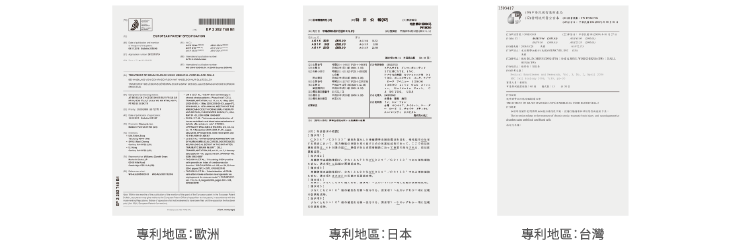
International Certification and Quality Systems
StemCyte has established a quality management system based on international standards, covering cord blood collection, processing, testing, storage, release, transportation, and traceability. StemCyte U.S. and StemCyte Taiwan are subject to regulatory oversight in their respective jurisdictions and continuously maintain the required licenses, registrations, and international accreditations. Both StemCyte U.S. and StemCyte Taiwan complete annual U.S. FDA Human Cell and Tissue Establishment Registration. StemCyte Taiwan also undergoes regular inspections by the Taiwan Food and Drug Administration (TFDA) and maintains a Human Organ Bank Establishment Permit.
In addition, StemCyte U.S. and StemCyte Taiwan regularly undergo professional assessments by independent international accreditation organizations. StemCyte Taiwan is the only cord blood bank in Taiwan to hold both AABB (Association for the Advancement of Blood & Biotherapies) and FACT (Foundation for the Accreditation of Cellular Therapy) accreditation for cord blood banking. Through international hematopoietic stem cell search and collaboration networks, including NMDP and WMDA, StemCyte connects its cord blood resources with the global transplant community.
U.S. FDA Human Cell and Tissue Establishment Registration
The U.S. Food and Drug Administration (FDA) is responsible for protecting public health by regulating the safety of drugs, biological products, medical devices, food, cosmetics, and radiation-emitting products. Under Section 361 of the U.S. Public Health Service Act, establishments that manufacture human cells, tissues, and cellular and tissue-based products are required to register with the FDA and periodically update their registration.
Both StemCyte U.S. and StemCyte Taiwan maintain FDA Human Cell and Tissue Establishment Registration and regularly update their registrations in accordance with stringent quality standards.
TFDA Human Organ Bank Establishment Permit
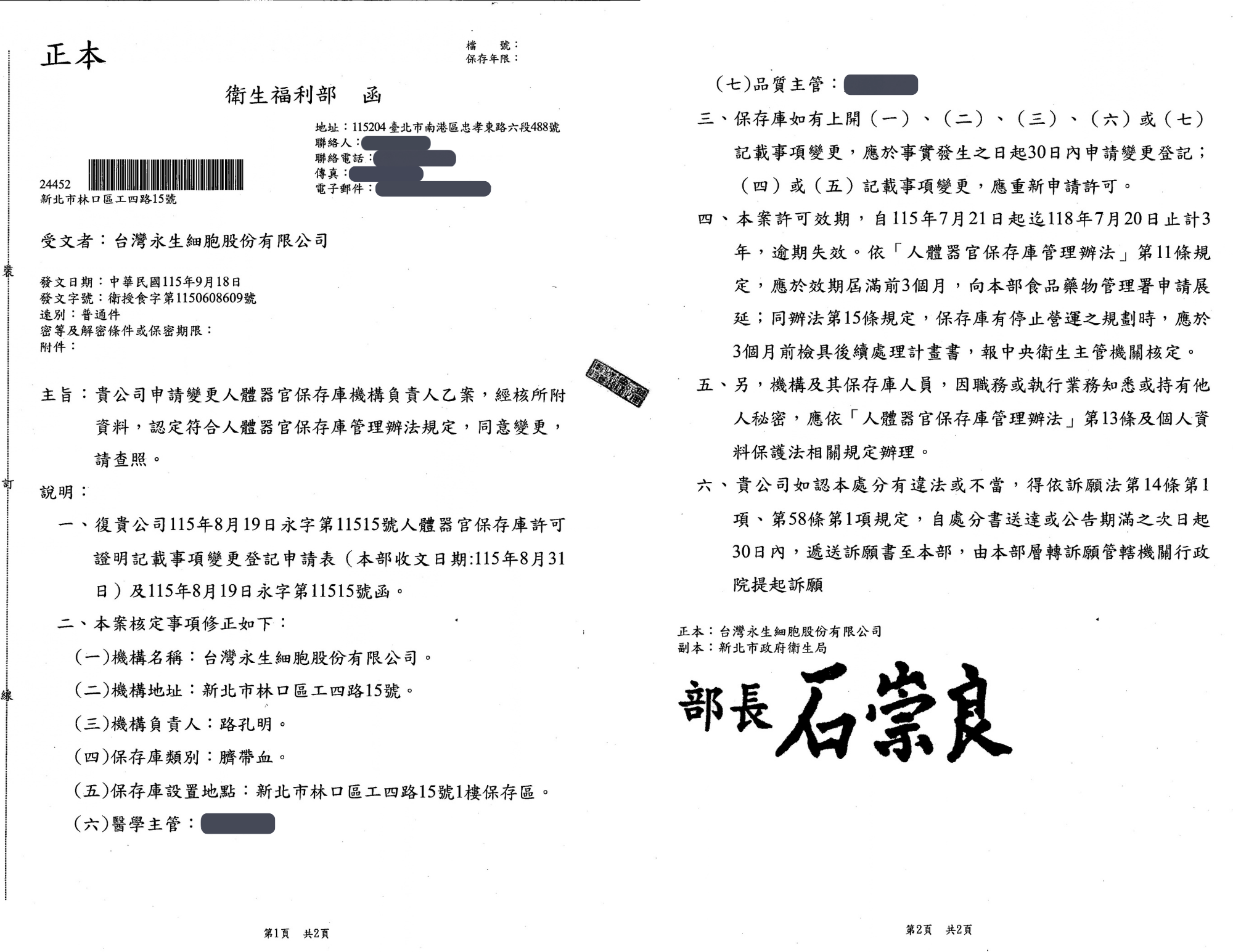
Taiwan’s Ministry of Health and Welfare (MOHW) promulgated the Regulations Governing the Management of Human Organ Banks, which require organizations engaged in the processing or storage of human organs—including human tissues, cells, and their derivatives—for transplantation purposes to obtain approval to establish a human organ bank and undergo regular inspections by the competent authority.
Since 2009, StemCyte Taiwan’s cord blood bank has passed on-site inspections conducted by the Taiwan Food and Drug Administration (TFDA) and maintained its Human Organ Bank Establishment Permit. StemCyte Taiwan continues to undergo TFDA on-site inspections every three years and complies with applicable Good Tissue Practice (GTP) requirements for human organs, tissues, and cells.
AABB — Association for the Advancement of Blood & Biotherapies
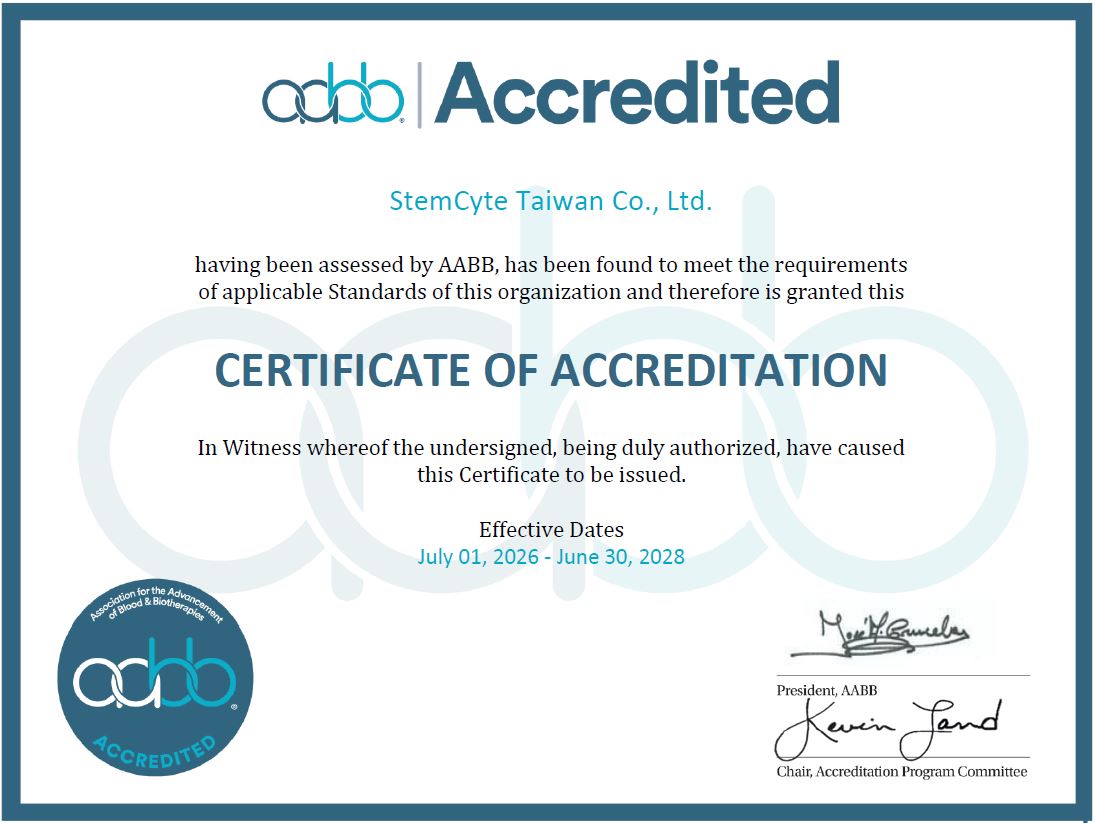
The Association for the Advancement of Blood & Biotherapies (AABB) is a leading global accreditation organization in transfusion medicine and cellular therapy. More than 80% of cord blood banks in the United States are AABB accredited. AABB conducts on-site assessments of accredited organizations every two years to evaluate compliance with rigorous quality and safety standards.
Both StemCyte U.S. and StemCyte Taiwan cord blood banks are AABB accredited and continue to undergo regular on-site assessments to maintain quality management systems that meet international standards for cord blood banking and cellular therapy.
FACT — Foundation for the Accreditation of Cellular Therapy
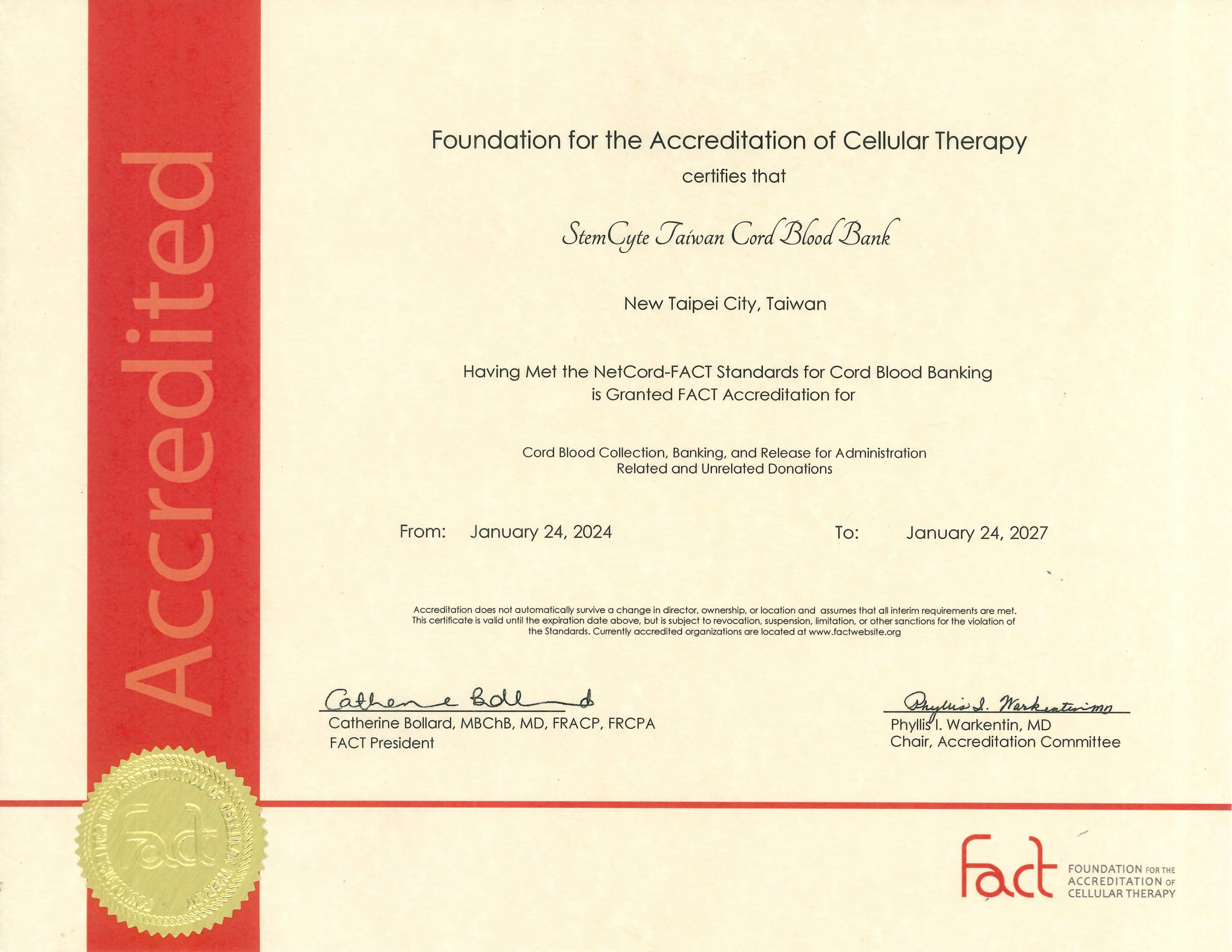
The Foundation for the Accreditation of Cellular Therapy (FACT) is a leading international accreditation organization in the field of cellular therapy and transplantation. Its standards cover the collection, processing, testing, storage, release, and clinical administration of cord blood, with an emphasis on comprehensive quality management throughout the entire process, from donor source to clinical application.
Both StemCyte U.S. and StemCyte Taiwan cord blood banks are FACT accredited and continue to undergo regular on-site assessments. StemCyte Taiwan remains the only FACT-accredited cord blood bank in Taiwan.
NMDP — National Marrow Donor Program
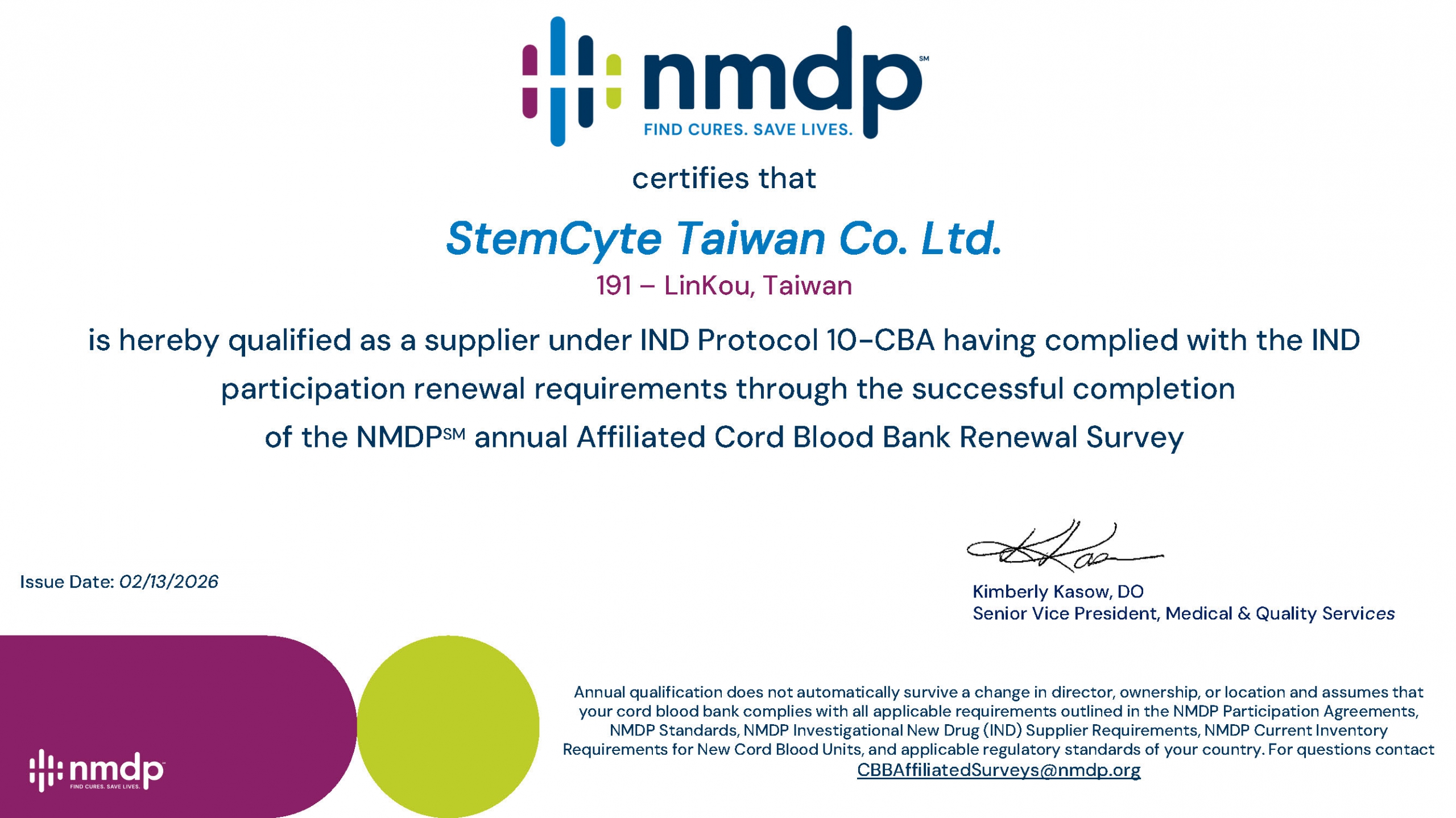
The National Marrow Donor Program (NMDP) operates a major global registry and search platform for unrelated bone marrow and cord blood hematopoietic stem cell donors, providing matching and search services for transplant physicians and patients worldwide. Cord blood banks must successfully complete NMDP’s rigorous documentation review and on-site assessment process to become members of the NMDP network.
Both StemCyte U.S. and StemCyte Taiwan cord blood banks are members of the NMDP network. Their publicly donated cord blood units are available through the NMDP platform for search and matching by transplant centers worldwide, supporting the needs of patients requiring transplantation across the globe.
WMDA — World Marrow Donor Association

The World Marrow Donor Association (WMDA) facilitates access to hematopoietic stem cell resources worldwide, enabling transplant centers to search for, match, and access suitable stem cell products. The WMDA network includes nearly 800,000 cord blood units from 55 countries.
StemCyte U.S. and StemCyte Taiwan continue to register eligible publicly donated cord blood units with WMDA. Together, they have registered data for more than 30,000 publicly donated cord blood units, helping increase opportunities for patients worldwide to access suitable resources for transplantation.
ISBT 128 International Standard
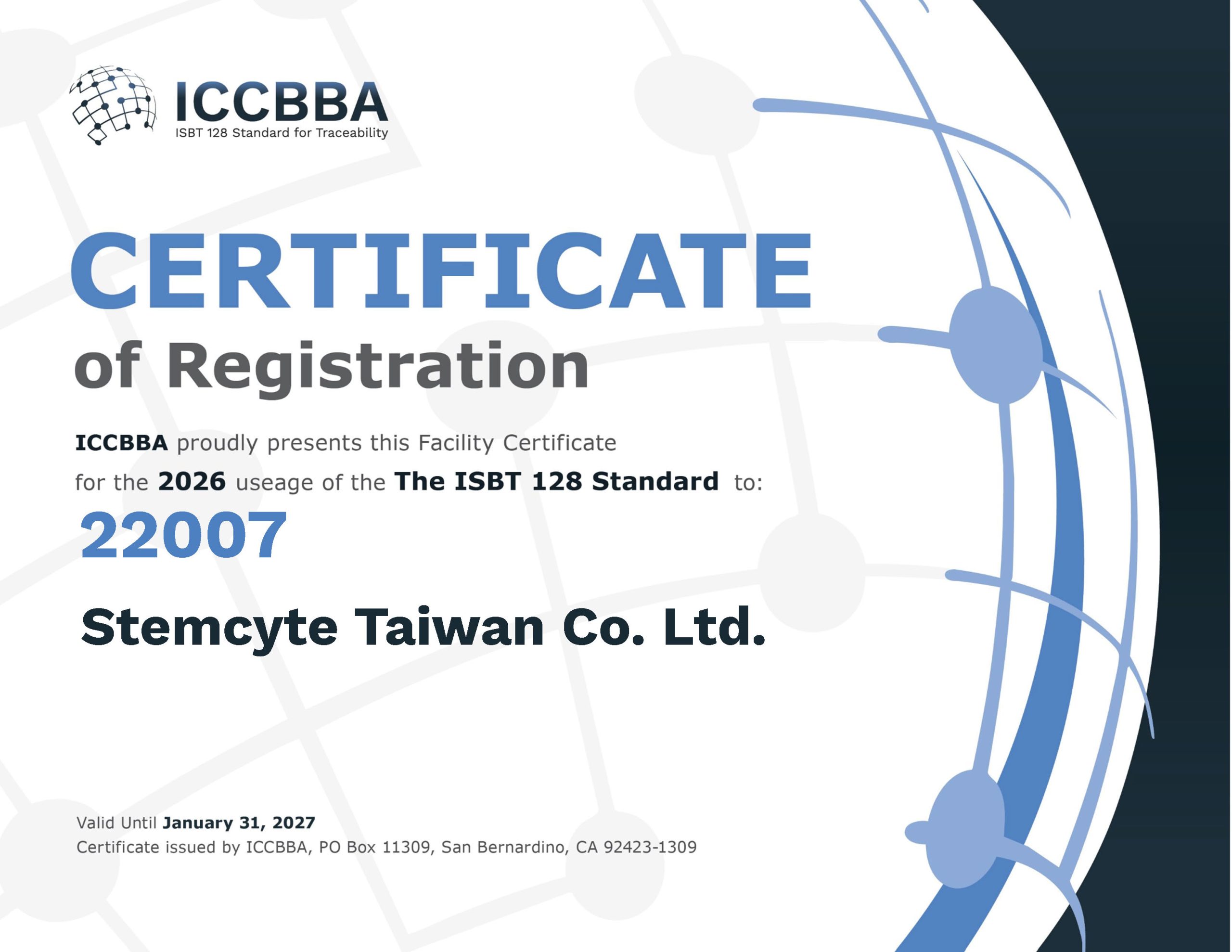
ISBT 128 is a global standard developed and managed by ICCBBA (International Council for Commonality in Blood Banking Automation) for the identification, labeling, and traceability of medical products of human origin. It applies to human-derived products including blood, cord blood, stem cells, tissues, and organs.
Through the ISBT 128 system, each cord blood and stem cell product can be assigned a unique identifier, enhancing safety and traceability in clinical use. The standard has been widely adopted by healthcare systems in more than 87 countries worldwide.
Patented Red Blood Cell Non-Depletion Processing Technology
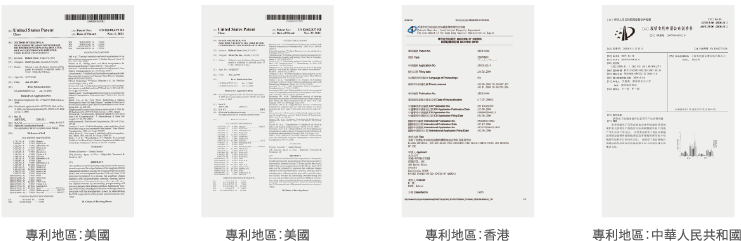
Patented Stem Cell Packaging and Shipping Technology
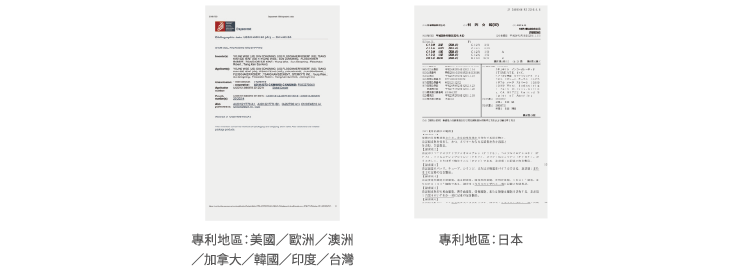
Patented Cord Blood Stem Cell Technology for HIV Treatment
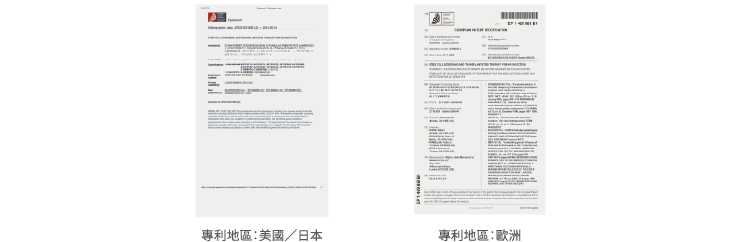
Patented Cord Blood Stem Cell Technology for the Treatment of Brain Damage